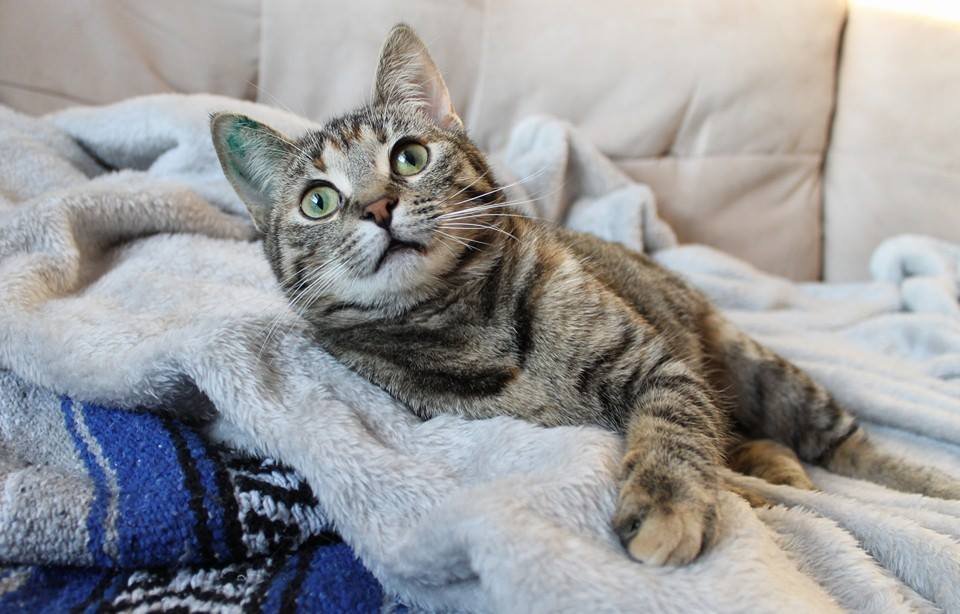
SASKATOON, SASKATCHEWAN, 10 JANUARY 2011: According to the Vietnamese calendar, 2011 is officially the Year of the Cat. That makes this the perfect year to celebrate North America’s number one animal companion with a nation-wide ‘Year of the Cat’ campaign. The program is designed to increase the value of owned, homeless and feral cats and, in doing so, address the issue of cat overpopulation in Canada.
“We are pleased to announce that we will be one of many organizations across the country working collaboratively on Year of the Cat initiatives,” explains Linda Jean Gubbe, SCAT Spokesperson. “This program is being lead by a new national volunteer organization called Care for Cats. Coping with the seemingly never-ending stream of stray, abandoned and feral cats that enter our shelter each year is a growing problem … not only in our community but also across the country. With the Year of the Cat resources to assist us, we can work together to create responsible and compassionate communities where people care for cats.
Check out www.careforcats.ca for information.
Some of the Year of the Cat events planned for 2011 includes:
- May — The PURRfect month for a cat awareness campaign and an adopt-a-thon
- Sept. 23 – Oct. 2 — National Cat ID Week focusing on permanent identification, licensing and registration
- December — Hoping for Fur-ever homes adopt-a-thon
Hamilton, Ontario, veterinarian and feline specialist, Dr. Elizabeth O’Brien, is the official spokesperson for the Care for Cats committee. She says that 2011 The Year of the Cat is modeled after a similar highly successful campaign created by the Hamilton-Burlington SPCA in 2008.
“Care for Cats has built its public educational campaign based on solid facts,” explains O’Brien. “The 2008 Business of Urban Animals Survey (BUAS), commissioned by PetLynx Corporation for the International Summits for Urban Animal Strategies, provided statistical proof of what people working in animal shelters and veterinary hospitals have known for decades: cats are not generally valued as much as dogs. In almost every category covered by this survey, dogs received better care than cats.”
The PetLynx Urban Animal Survey revealed:
- There are 8.5 million cats in Canada
- 36 per cent of Canadian homes have one or more cats
- 50 percent of these cats did not receive regular veterinary care in the past 12 months
- Less than 25 per cent of Canadian cats have permanent identification, such as tattoos or microchips
- 41 per cent either haven’t been vaccinated in the last four years or have never been vaccinated at all
- 54 per cent of people who owned cats that were not currently spayed or neutered reported that they were
“unlikely” to have their cats altered in the coming year.
“The message we need to get to the public is not only about the importance of spaying and neutering cats as a means of population control,” concludes O’Brien. “We also have to try to change attitudes about the intrinsic value of cats in our society. In a nutshell, we need people to start treating cats like dogs! We invite anyone interested in cats and creating healthy communities to visit our website and get involved in the Year of the Cat campaign.”